
ICEYE: Sovereign Intelligence Through Finnish Innovation
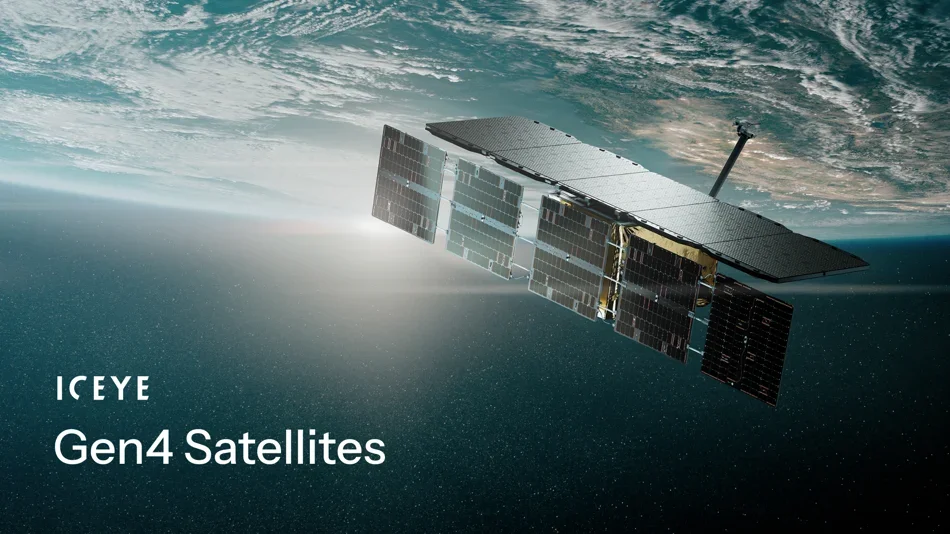
ICEYE is a Finnish space technology company and the global leader in synthetic aperture radar (SAR) satellite operations. By building and operating the world’s largest SAR satellite constellation, it provides governments and commercial customers with reliable, all-weather Earth observation data in near real time.
How a Finnish satellite company is shaping Earth observation and European security from its new Valencia center
At our Annual Gala few months ago, we recognized ICEYE’s expansion to Valencia as Project of the Year within our network. The company stands as a remarkable representation of Finnish innovation, reflecting a well-known Finnish strength: solving complex problems through practical engineering.
In this article, we look at ICEYE’s approach to satellite technology and why its expansion in Spain is relevant for the future of Earth observation, as well as for Europe’s security and resilience in a changing global context.
A Shift in Earth Observation
The satellite data and Earth observation sector is undergoing rapid change. According to ICEYE’s leadership, the focus is moving away from simply purchasing satellite imagery toward building and operating complete intelligence systems.
“Governments are no longer satisfied with buying images alone,” explains company representative Gonzalo Garcia Munoz. “They want systems they can control that deliver usable information in near real time.” This shift toward sovereign intelligence has accelerated since the war in Ukraine, which has underscored both the operational value of continuous SAR (Synthetic Aperture Radar) monitoring and the risks of relying heavily on external partners for critical data.
Why Constellation Size Matters
A key development in the industry is the growing importance of satellite constellation size. One or two satellites are not enough to provide frequent coverage. As a result, countries investing in sovereign SAR capabilities are increasingly planning constellations of four, eight, or more satellites.
This reflects the need for persistent monitoring: the ability to observe the same location several times a day. Whether for defense, disaster response, or environmental monitoring, frequent and reliable coverage has become a basic requirement.
SAR and All-Weather Monitoring
SAR technology is playing a larger role in disaster response and climate resilience. Unlike optical satellites, SAR can operate at night and see through cloud cover, making it particularly useful during emergencies when visibility is often limited.
ICEYE provides near real-time data related to floods, wildfires, and hurricanes for governments and insurers worldwide. As extreme weather events become more frequent, dependable monitoring systems are increasingly seen as part of essential public infrastructure.
Skills and Industry Direction
Looking ahead, the satellite industry will require expertise that bridges space engineering, defense operations, and AI-driven analytics. ICEYE sees its greatest growth potential in supporting countries building their first space-based intelligence systems, including the delivery of turnkey, sovereign ISR (Intelligence, Surveillance, and Reconnaissance) systems.
The company combines satellite manufacturing, ground systems, analytics, and training. With more than 60 satellites launched, ICEYE has demonstrated its ability to deploy and operate systems at scale.
Spain and the Valencia Center
Spain has a strong aerospace and defense base and continues to invest in national space capabilities. ICEYE’s Valencia center supports its European operations through local engineering and production and reflects a broader effort to build partnerships within the countries it operates in.
For Spain, ICEYE’s presence contributes to the development of local expertise in SAR technology. This is particularly relevant given the country’s exposure to climate-related risks such as flooding, wildfires, and coastal erosion. SAR-based monitoring can support civil protection agencies and environmental authorities in managing these challenges.
From Valencia, ICEYE supports both defense and civil security needs across Spain, the Iberian Peninsula, and the Mediterranean region.
A Finnish Engineering Tradition
ICEYE’s development is closely linked to Finland’s engineering culture. The company began with a straightforward question: could SAR satellites be made smaller and more affordable? Answering it required rethinking satellite design, manufacturing, and deployment.
Today, ICEYE operates the world’s largest SAR satellite constellation, continuing a Finnish tradition of developing practical engineering solutions with international relevance.
Supporting Sovereign Intelligence
ICEYE emphasizes enabling countries to build and control their own intelligence capabilities. Rather than focusing solely on individual products, the company works with governments to develop systems that support long-term security and situational awareness.
These systems have both defense and civilian applications. The same monitoring capabilities used for military purposes can also support flood detection, wildfire monitoring, and post-disaster damage assessment.
Looking Ahead
ICEYE’s expansion in Spain reflects its broader European focus and long-term approach to working with public institutions. As space-based capabilities become an increasingly important part of national infrastructure, companies like ICEYE are contributing to how countries develop independent monitoring and intelligence systems.
The Valencia center illustrates how Finnish engineering expertise continues to be applied to current security and climate-related challenges, through a practical and systems-focused approach.
ICEYEs expansion is an example of how cross-border cooperation, technological expertise, and long-term partnerships can reinforce both competitiveness and resilience. In a time when strategic autonomy is increasingly central to Europe’s agenda, initiatives like ICEYE’s remind us that innovation and security go hand in hand, and that Finnish companies continue to play a meaningful role in shaping that future.
